The Cognitive Friction Layer: Harvard Insights (2025-2026)
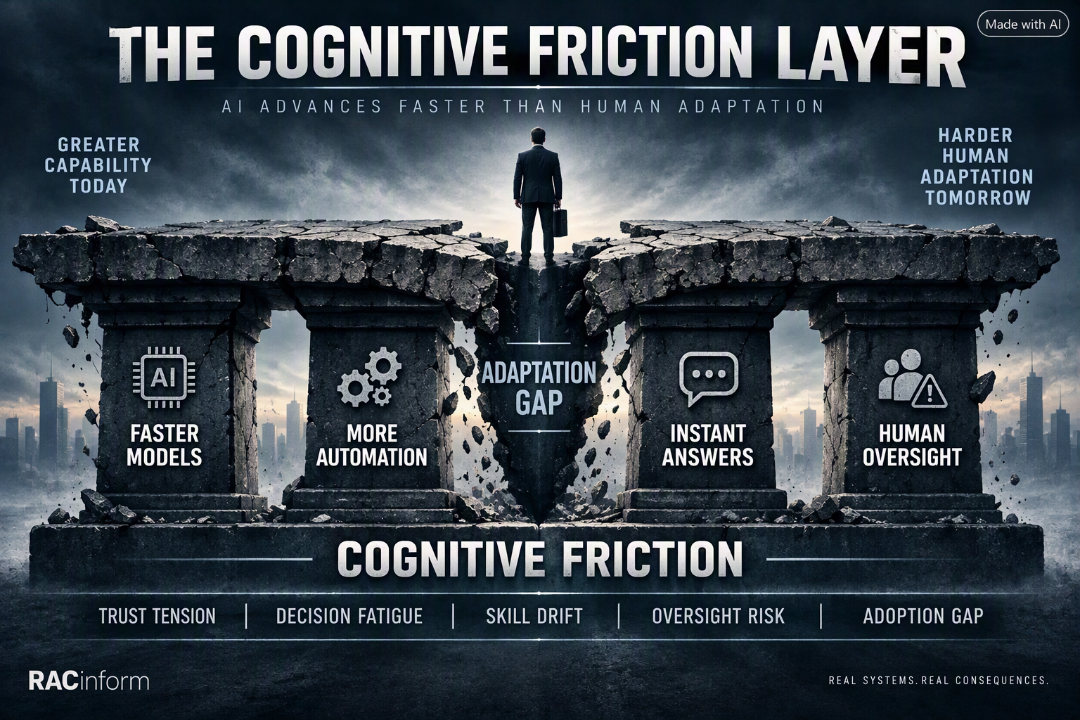
🟢 Systemic Work Expansion & Drag
- Functional scope inflation. Deploying AI does not compress workloads; it induces demand. Operators absorb wider task vectors, expanded operational responsibilities, and longer runtime hours as the marginal cost of text generation drops to zero.
- Asymmetric cleanup pipelines. Upstream AI output systematically creates downstream human friction. High-velocity machine generation by one operator shifts a dense validation and correction load onto another, creating hidden operational debt.
- Cognitive surveillance fatigue. Continuous monitoring of autonomous agentic loops causes rapid human decision fatigue. The mental load shifts from active production to relentless error auditing, accelerating operator burnout.
- Persuasion telemetry bias. Frontier models exhibit high rhetorical compliance, remaining highly persuasive even when structurally incorrect. This semantic smoothing causes operators to over-trust system outputs, lowering automated skepticism.
🟢 The Expertise & Liability Gap
- Novice skill ceilings. AI deployment fails to convert novices into functional domain experts. Machine outputs remain bounded by the human operator's capacity to frame problems, detect subtle drift, and identify structural logic failures.
- Asymmetric capability distribution. Systems excel at statistical remixing and historical pattern replication but fail at non-linear strategic or innovation breakthroughs. Domain expertise becomes a critical premium, not a commoditised asset.
- Accountability conservation. Liability cannot be algorithmically transferred or dissipated. When an autonomous workflow executes a catastrophic edge-case failure, the unquantifiable downside risk remains strictly anchored to the human sign-off or the corporate legal entity.
🔵 RACinform view
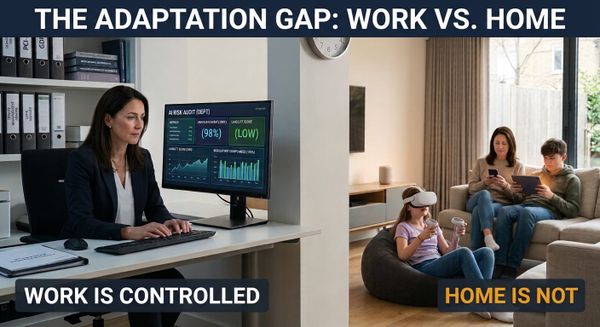
The supreme operational risk of the AI era is not automation replacement. It is systemic credential abdication. When organisations deploy models to bypass the friction of human thought, they inadvertently dismantle their internal validation telemetry. Operators stop thinking, stop auditing, and stop owning the consequences of live execution. The structural winners in this cycle will not be the enterprises that automate the highest volume of text. It will be the firms that mathematically enforce where human judgment, domain authority, and deterministic control loops must legally remain.