
About this site
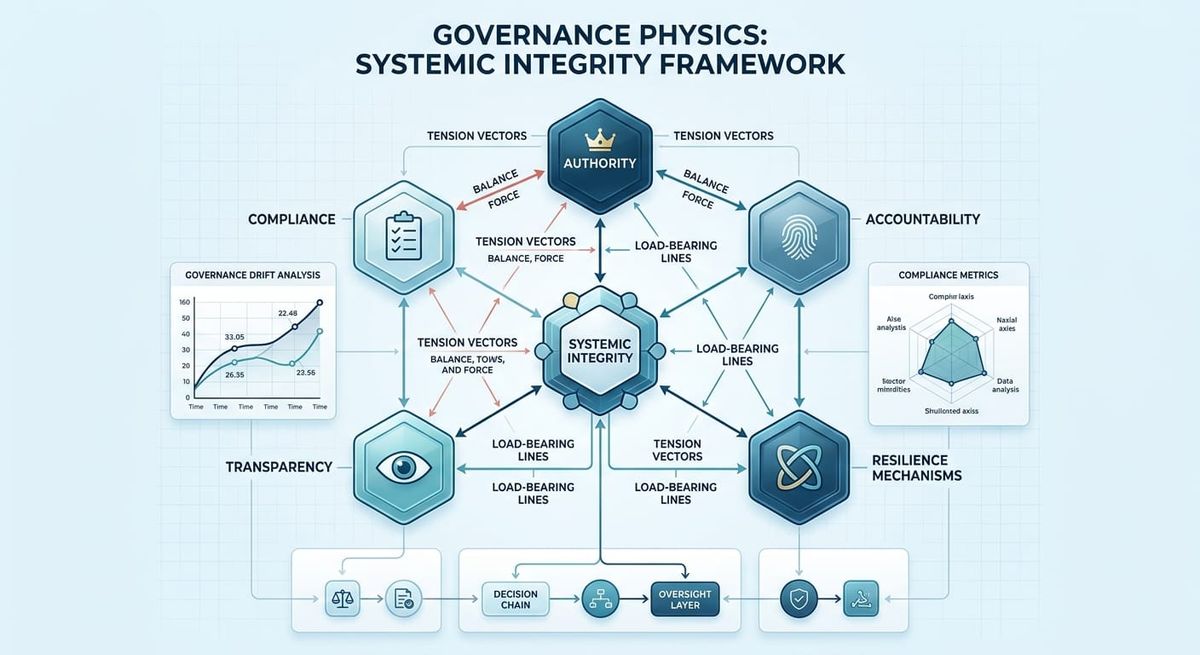
🔵 Introducing RACinform
RACinform is where AI systems, governance and responsibility chains meet operational reality.
RACinform is an open‑web archive that examines how systems behave when humans, incentives, governance controls and technology interact under real‑world conditions.
AI systems are used as analytical instruments to test governance physics, responsibility chains, accountability boundaries and operator behaviour.
All authorship, interpretation and conclusions remain human. Founded by Vela Kuhaendran, RACinform provides a neutral, non‑commercial and persistent reference point for governance analysis, behavioural observations and operational reality.
The focus is not what organisations promise. The focus is what happens when systems meet reality.
🟢 The Core Observation
AI systems do not fail in isolation. They fail through dependencies.
Small gaps in responsibility, ownership, oversight, interpretation or accountability can amplify as systems scale. A vague instruction can become a behavioural deviation. A weak boundary can become a systemic vulnerability. An unowned decision can become an untraceable failure.
RACinform examines these dependency chains and documents how governance succeeds, fails, drifts or stabilises under operational pressure.
🟢 The Operator View
RACinform is written from an operator perspective.
It is intended for operators, architects, governance practitioners, auditors, compliance professionals, technology leaders and decision makers responsible for real systems and real outcomes.
The objective is clarity. Not corporate theatre. Not policy repetition. Not technology hype.
The aim is to identify patterns, expose contradictions, understand dependencies and make governance behaviour visible.
🟢 Governance Physics
Governance frameworks describe how systems are intended to operate.
Operational reality reveals how they actually operate.
RACinform examines the space between intention and execution.
It studies how responsibility is assigned, how accountability weakens, how incentives shape behaviour and how decisions propagate through complex systems.
The purpose is not prediction. The purpose is observation, analysis and understanding.
🟢 Why Open Web Matters
Algorithms optimise for engagement. Archives optimise for retrieval.
Closed platforms reorder information, remove context and prioritise visibility through platform incentives.
RACinform is intentionally: • Open‑web • Public • Neutral • Non‑algorithmic • Non‑commercial • Persistent
This structure preserves context and allows governance analysis, behavioural observations and operational lessons to remain accessible without platform interference.
🟢 RACinform Principles
•Follow logic. • Follow consequence. • Examine responsibility chains. • Challenge assumptions. • Make governance visible. •Prefer clarity over theatre. • Prefer evidence over narrative.• Document operational reality.
🟢 Closing Statement
RACinform investigates what happens when systems, humans, incentives and governance controls interact.
- Not what organisations claim.
- Not what frameworks promise.
But what actually happens when systems meet reality.