Independent Convergence: Different Routes, Similar Concerns
🟢Overview
Independent organisations often arrive at similar conclusions through very different research pathways.
This comparison examines how Agents, Robots, and Us (McKinsey), Governing Agentic AI: Managing Systemic Risk for Trusted Adoption (WEF -World Economic Forum), and the RACinform archive are addressing emerging themes around AI adoption, workflow transformation, human adaptation, accountability and agentic governance.
The objective is not to declare a winner, but to identify areas of convergence, divergence and emerging consensus.
🟢Independent Convergence — Different Routes, Similar Concerns
| Theme | McKinsey | WEF | RACinform Archive |
|---|---|---|---|
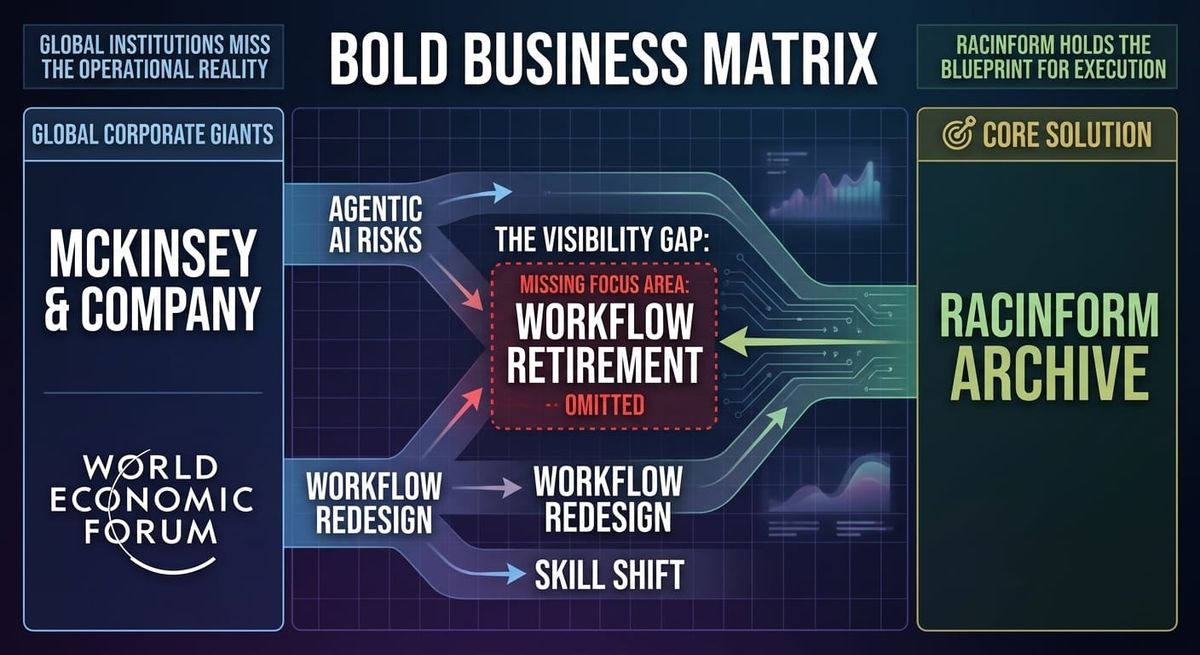
| Workflow redesign | ✓ | Partial | ✓ Strong Coverage |
| Workflow retirement | Omitted | Omitted | 🎯 Core Thesis (AI ROI / The Clock) |
| Deskilling | ✓ | ✓ | ✓ Strong Coverage (Junior Lawyers) |
| Human adaptation | Partial | ✓ | ✓ Strong Coverage (ASAM Framework) |
| Cognitive surrender | Omitted | ✓ | ✓ Strong Coverage |
| Agent authority | Partial | ✓ | ✓ Strong Coverage (ACW / IAM Failure) |
| Accountability | Partial | ✓ | ✓ Strong Coverage (FCA Mills Review) |
| AI fluency | ✓ | Partial | ✓ Strong Coverage (User Literacy) |
🟢RACinform View
The interesting observation is not that these organisations agree on every issue. They do not.
The interesting observation is that independent research streams are increasingly converging on similar operational concerns: workflow redesign, deskilling, accountability, human adaptation and delegated authority.
Where RACinform differs is its continued emphasis on workflow retirement, cognitive surrender, identity authority boundaries and the long-term consequences of adaptation debt.
Convergence does not prove correctness, but it often highlights where underlying structural pressures are becoming too visible to ignore.