GenAI - The Cleanup Economy
🟢 Overview
- GenAI didn’t just accelerate creation — it collapsed the middle of the process.
- Open‑web telemetry shows three structural signals defining a new organisational cost centre inside engineering teams: The Cleanup Economy.
🟢🟢 The Cleanup Economy
🟢1️⃣ The 8× Code Duplication Shock
- Telemetry across 623M code changes shows an eightfold spike in duplicated blocks since AI assistants went mainstream.
- GenAI generates code locally without architectural awareness, causing system coherence to collapse.
- Prompt‑stage velocity becomes duplication debt downstream.
🟢2️⃣ The Maintainability Paradox
- GenAI‑generated code often compiles cleanly — and that’s the trap.
- Bug‑fix rates: GenAI files 11.73% vs human files 16.76%.
- Maintainability collapses because structural alignment is missing.
- Silent decay passes automated tests while architecture fragments underneath.
🟢3️⃣ The Human Bottleneck
- GenAI accelerates generation; humans still own comprehension.
- Code review windows expanded from 7.03 → 10.48 days.
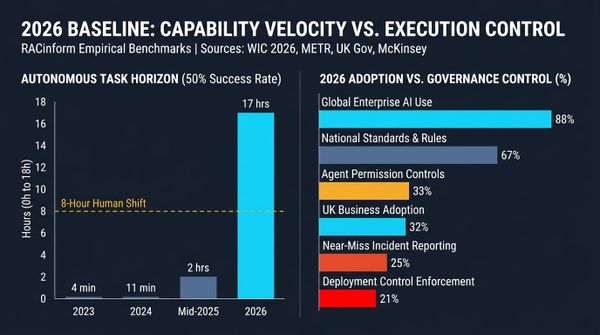
- 88% of enterprise developers cite GenAI as a primary driver of rising technical debt.
- Front‑end velocity becomes deep comprehension debt at the review boundary.
🟢 RACinform View
GenAI didn’t remove friction — it relocated it.
- The cleanup economy is now one of the largest hidden costs in modern software organisations:
- duplication debt
- maintainability debt
- comprehension debt
- review bottlenecks
- architectural entropy
True efficiency isn’t how fast GenAI can generate code — it’s whether humans can understand, maintain, and build what the system produces.